Your Board's Real Job in Major Gifts: What to Ask Board Members to Do and Say
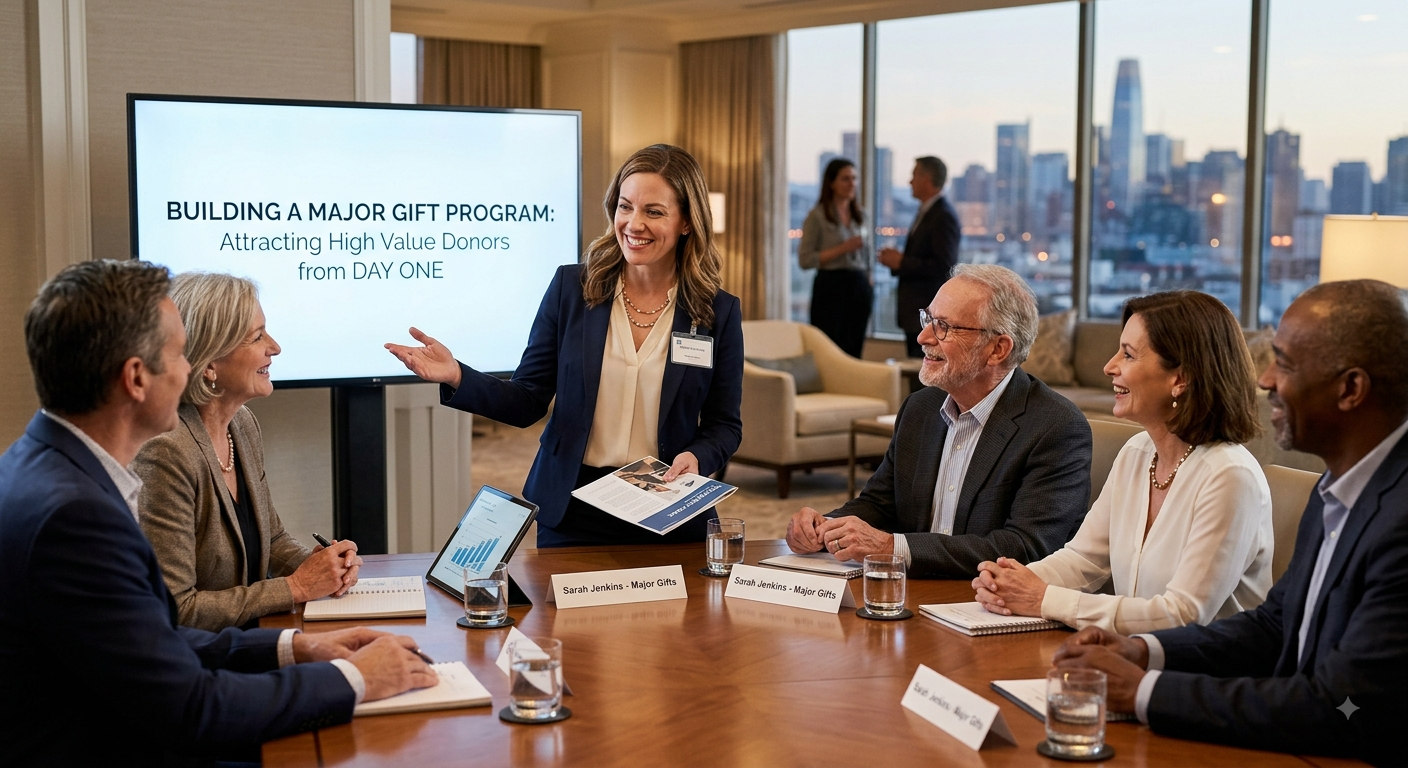
"Get the board involved in fundraising" isn't a plan. Give board members clear, comfortable roles at every stage of a major gift relationship, with word-for-word language they can use.
"Get the board involved in fundraising."
You've probably heard it. But what are you supposed to ask board members to do on Monday morning? Hand them a list of wealthy people? Ask them to make cold calls? Hope someone volunteers to ask for a six-figure gift?
That's not a plan. It's a recipe for awkwardness, and one more thing for a solo Executive Director to manage.
Your board does not need to become an unpaid development team. It does need clear, useful roles in building donor relationships. Staff should lead the strategy. Board members can bring credibility, connection, personal commitment, and follow-through.
Here's a practical playbook you can use with a small board and a busy staff.
Start with a clear division of work
A board member's role depends on the relationship, the person's strengths, and the specific next step. One trustee may open a door. Another may host a conversation or join you in a meeting. A third may be the right person to make a thank-you call.
Your job is to make the assignment specific.
For each donor relationship, identify:
- The goal: What do you want to learn or accomplish?
- The board member's role: What exactly will they do?
- The staff partner: Who prepares and supports them?
- The next action and deadline: What happens, and by when?
That's donor moves management in plain language: a purposeful next step, a clear owner, and a reason for doing it. More contacts do not automatically mean more progress. See the difference between activity and meaningful donor progress.
1. Ask board members to help identify people, not just submit names
A name without context is not a relationship strategy. Ask board members who they know, how they know them, and whether they'd be comfortable making an introduction.
Try this prompt at a board meeting:
Who in your personal or professional circles cares about this issue, knows our work, or might be interested in learning more? For each person, tell us how you know them and what would make an introduction feel natural.
Keep the first request manageable. Ask each board member to bring two or three names, with context, rather than a long list they'll never revisit. Staff can assess fit and decide on a thoughtful next move together.
Your board can help you spot promising connections, including people already giving or engaging with your organization. Start by looking at the major gift potential in your existing donor relationships.
2. Give them a simple way to open a door
The board member's job is not to deliver your full case for support. It's to make a sincere, low-pressure introduction and, with permission, connect the person to you.
Hand them language they can adapt:
I'm on the board of [Organization] because [personal reason]. We're doing work I think you may find interesting. Would you be open to a short conversation with our Executive Director, [Name], to hear more? No pressure at all: I thought of you because [specific connection].
If the person says yes, the board member can connect you by email or text. If they're unsure, thank them and leave the choice with them. No repeated nudging. No surprise solicitation.
A warm introduction opens a door. It does not give the organization permission to walk through it without the person's agreement.
3. Ask for a purposeful cultivation touch
Board members can help a donor feel connected to the people behind the mission. Invite them to a site visit, introduce them to a program leader, share why they serve, or join a staff-led conversation.
Before a touchpoint, tell the board member what you hope to learn or accomplish. Then give them one or two questions to use, not a script they have to memorize.
"What drew you to this work?" and "Which part of our mission feels most connected to your own experience or priorities?"
Their role is to listen and share honestly. Your role is to guide the conversation, hear the donor's interests, and decide what the next step should be.

4. Decide together whether a board member should join the ask
A board member can make a major gift ask, but only when their relationship with the donor, comfort level, and preparation make sense. Sometimes they lead the request. Sometimes they share why they give and let the staff member make the ask. Sometimes their presence alone adds confidence.
Staff should set the strategy: the opportunity, the amount, the roles, and the timing. Brief everyone beforehand. Agree who speaks first, who makes the ask, and who follows up.
If a board member is prepared to make the request, give them direct language:
Would you consider a gift of $[amount] to help [Organization] [specific outcome]?
Then pause. Let the donor think and respond. Don't fill the silence, bargain against yourself, or improvise a different amount.
If the board member isn't the right person to ask, that is not a failure. They can make the introduction, share their experience, and let the Executive Director or development lead handle the request. The right role is the one that supports the donor relationship.
For practical language you can adapt, share the free 5 Ask Sentence Formulas. For more focused practice, The Ask Workshop helps fundraisers prepare the words and rehearse the ask.
5. Invite them to thank donors within 48 hours
A personal thank-you from a board member can mean a lot, especially when it's prompt and specific. Assign the call, explain what the donor gave to support, and make sure the board member knows whether the donor has any communication preferences.
Here's a short script they can use:
Hi, [Name]. It's [Board Member] from [Organization]. I'm calling to thank you for your gift and for caring about [specific work]. Your support means a lot to us. I won't keep you. I just wanted you to hear directly from me how grateful we are.
The call is about gratitude, not another ask. If the donor doesn't answer, leave a brief message or follow your organization's preference for a note. Record that the call happened so the staff member responsible for stewardship can follow up appropriately.

6. Ask them to help close the loop
Board members don't have to manage donor reporting. They can, however, help make the impact personal: attend a donor update, share a relevant program story, or make a follow-up call after staff has reported what the gift helped make possible.
I wanted to share a quick update on [specific outcome]. Your support helped make this work possible, and I thought you'd like to know what's happening. Thank you again.
Make sure the update is accurate and appropriate to share. Staff should provide the information and handle any questions that require detail.

Talk openly about board giving
Board members should be able to speak honestly about why they give. They do not need to share their gift amount, and no one should be coached to imply that every trustee gives the same amount.
I give to [Organization] because [personal reason]. I want to help make [specific outcome] possible, and I'm proud to be part of this work.
Set a clear expectation for board participation that respects different financial circumstances:
We ask every board member to make an annual gift that is personally meaningful and appropriate to their circumstances. Gifts may be different sizes; full participation shows our shared commitment to the mission. Please make your gift by [date], and contact [name] if you'd like to discuss a pledge or another way to participate.
The expectation is meaningful participation, not equal giving. Use the language that fits your board culture, and discuss the expectation before asking trustees to advocate for the organization's work.
Be clear about what not to ask
Don't ask board members to:
- Cold-call people they barely know.
- Deliver a detailed pitch or answer questions they aren't equipped to answer.
- Make a gift request without a staff briefing and agreed plan.
- Promise an outcome, benefit, or use of funds that staff hasn't approved.
- Share confidential donor information or give an update they haven't verified.
Most importantly, don't say "help with fundraising" and leave the rest to guesswork. Offer options: identify, introduce, host, listen, ask, thank, or follow up. Not everyone needs to do every job.
Board members can't replace major gift officer training, donor strategy, or staff follow-through. But with clear roles and a few well-chosen words, they can help you build stronger relationships, without turning your small board into a development department.
Give your board the words and the next step
Start with one donor relationship and one board member. Choose one specific action, give them the language, set a deadline, and agree who will follow up. Then review what happened and decide on the next move.
That's how you turn "get the board involved" into work people can actually do.
For a deeper guide to relationship-centered major gifts, explore Mary Petersen's book Small Table Big Philanthropy on the books page. If you want practical, hands-on Major Gift training, take a look at the Major Gift Intensive.
Want Mary's team to help implement this?
Explore our live intensives or group coaching programs.