Fundraiser Scripts: What to Say Before, During, and After the Ask
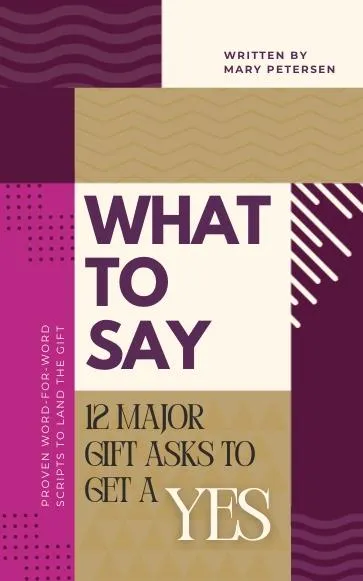
Word-for-word fundraiser scripts for your next major gift ask, so you know exactly what to say before, during, and after the ask, whatever the donor's answer.
You know the donor cares about your mission. You've had the conversations, shared the work, and found a reason to believe a major gift could be possible.
Then it's time to ask, and the words disappear.
A fundraiser script can help you prepare for that moment. Not so you sound rehearsed, but so you don't have to invent the language while managing your nerves. Use the scripts below as a starting point, then adapt them to the donor, your organization, and the specific opportunity.
Before the ask, agree on what you're asking for
A strong ask begins before you walk into the meeting. Get clear on three things:
- The purpose: What will the gift make possible?
- The amount: What specific gift are you asking the donor to consider?
- The next step: What will you do if the donor says yes, needs time, or declines?
Review what you know about the donor's interests and past conversations. Don't confuse a donor's ability to give with their willingness to give. Your ask should connect to what they care about.
If you're not sure what to ask in that first real conversation, our free guide to 15 discovery questions for major donor meetings gives you the exact questions to choose from. And if you're unsure whether the donor is ready for a formal request, a preliminary conversation can help you understand their interests and share the opportunity before you schedule the ask. Capital Campaign Pro explains how a pre-ask meeting can set up a major gift conversation.
One caution: a string of coffees and updates isn't progress. There's a real difference between cultivation activity and meaningful donor progress in moves management. Know which one you're in before you book another meeting.

Open with a clear agenda
After a little conversation, tell the donor why you're there. You might say:
Thank you for making time to meet. I'd like to hear what matters most to you about [organization or issue], share our plans for [project], and, if it feels aligned, ask whether you would consider helping make it possible. Does that sound all right?
This is direct without being abrupt. It gives the donor a chance to agree to the conversation and sets an expectation that you may make a request. For more word-for-word language built on this principle, our permission-based invitation script is free to download.
Ask before you make your case
Don't launch into a long presentation before you understand what matters to the person in front of you. Ask a question, then listen:
What first connected you with our work?
When you think about [issue], what change would you most like to see?
What questions or concerns do you have about this plan?
Use the donor's own words to guide what you say next. If they tell you access is a priority, show how the project expands access. If they care about long-term results, explain what the organization can sustain.
During the ask, say the amount plainly
A major gift request needs a clear amount, a clear purpose, and a clear invitation. Keep your case concise: connect the donor's stated interest to the opportunity, explain what their gift could do, and make the ask. If you're not sure what amount to land on, our free target ask calculator walks you through it.
Use this fundraiser script to make the request
You mentioned that [donor priority] matters to you. That's why I wanted to talk about [project]. We plan to [specific action], which will [specific outcome]. Would you consider a gift of $[amount] to help make that possible?
This is one pattern among many. Our free 5 ask sentence formulas give you five different ways to build the ask sentence, depending on the donor and the moment.
For a multiyear commitment, add the timing:
Would you consider a commitment of $[total amount], paid at $[amount] each year for [number] years, to support [purpose]?
For a renewal or increase, make the connection to the donor's past support:
Your gift helped us [specific result]. We're now ready to [next step]. Would you consider renewing your support with a gift of $[amount]?
Then stop talking.
Let the donor respond. Don't rush to fill the silence, apologize for the amount, or immediately suggest a smaller gift. The pause gives them room to think and answer.
If the donor needs time
Of course. What information would be helpful as you consider it? When would be a good time for me to check back in?
Agree on a next step together. If the donor names a date, honor it.
If the donor raises a concern
Don't guess what's behind the hesitation. Ask:
Thank you for telling me. Is your main concern the amount, the timing, or the project itself?
Listen before offering options. If timing is the issue, you could explore installments or a multiyear pledge. If the project isn't a fit, ask what part of the work interests them more. The goal is to understand, not to talk someone into a gift they don't want to make.
If the donor declines
Accept the answer graciously:
Thank you for considering it, and for being candid with me. Would you be comfortable sharing whether the timing, the project, or something else made this a no? We value your relationship and want to stay connected in a way that works for you.
A no is an answer to this request. It doesn't give you permission to press for a different one. Thank the donor and respect their decision.
After the ask, make the next step real
Whether the answer is yes, no, or "I need to think about it," close the meeting with a clear next step.
To recap, I'll send [information] by [date], and we'll reconnect on [agreed date]. Does that work for you?
Then follow through. Write down what the donor said, what you promised, and when you'll do it. Every follow-through is a move, not an errand. It's how an existing donor becomes the foundation of your major gift pipeline.
If the donor says yes
Thank them in the moment, then confirm the details:
Thank you. We're grateful you're considering this. How would you prefer to make the gift, and when would you like to do that? And how would you like us to recognize your support?
Confirm the amount, payment schedule, gift purpose, recognition preferences, and any restrictions. Send a personal recap promptly. Once the gift arrives, make sure the appropriate receipt and thank-you follow your organization's process.
If the donor says "maybe"
A maybe needs a follow-up plan, not a vague "Let me know."
That makes sense. What questions would be helpful for me to answer? Would it work if I sent [information] by [date] and checked back with you on [date]?
Send what you promised, then reconnect when you said you would. For more on next steps after a donor's answer, read After the Ask: The Follow-Up Plan.
If the donor says no
Thank them for their time and consideration. Send any materials you promised, but don't keep pursuing the same request after they've declined. Continue the relationship in a way that respects the donor's wishes.
Use a script as preparation, not a performance
The best fundraiser scripts give you a structure you can rely on while leaving room for a real conversation. Before your next meeting, write down:
- The donor's connection to your mission.
- The specific impact you'll explain.
- The exact amount and purpose you'll ask them to consider.
- Your response to yes, maybe, and no.
- The follow-up you'll agree on.
Then say the ask out loud. If the words feel stiff, simplify them. If you keep avoiding the amount, practice saying it until you can say it clearly.
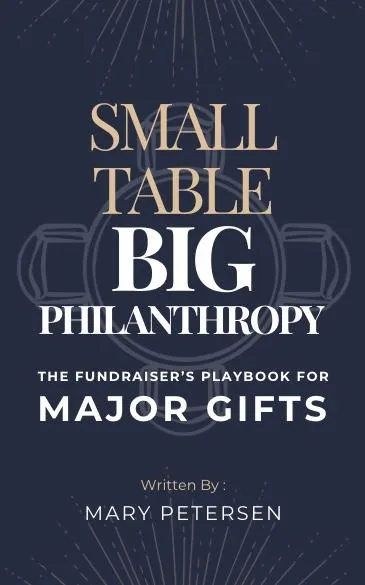
That's the thinking behind What to Say: 12 Major Gift Asks to Get a YES: practical language and real-world examples from Mary Petersen's 25 years as a working major gift officer. If you want to practice your own ask with coaching, explore The Ask Workshop. And if you need a fuller plan for your portfolio, donor conversations, and asks, see the Major Gift Intensive.
If you'd rather build the habit with ongoing support, Major Gift Momentum gives you group coaching twice a month and a curriculum you can work through at your own pace.
And if your organization hasn't yet built the internal foundation for six-figure gifts, start here: the major donor readiness gap explains what to fix before you ask for large gifts.
You don't need a perfect speech. You need a clear invitation, a specific request, and the confidence to let the donor answer.
Want Mary's team to help implement this?
Explore our live intensives or group coaching programs.